Arabic text to speech turns written Arabic into natural-sounding audio in a few seconds. For content creators and businesses, Arabic text to speech has become one of the easiest ways to publish more audio and video without hiring a voice artist for every single project.
In this guide, we explain why Arabic text to speech is worth using, walk through 7 clear benefits, and share simple tips for picking the right tool.
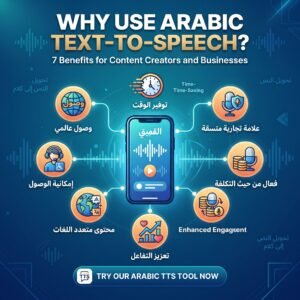
Table of Contents
What Is Arabic Text to Speech?
Arabic text to speech (TTS) is software that reads Arabic text out loud using an AI-generated voice. You type or paste your script, choose a voice, and the tool creates an audio file that you can download and use anywhere.
Modern tools can read Modern Standard Arabic, and many also offer regional styles such as Gulf, Egyptian, or Levantine. The result is audio that sounds far more natural than the robotic voices of a few years ago.
7 Benefits of Using Arabic Text to Speech
Here are the main reasons creators and companies are switching to AI voices for their Arabic content.
1. Save Time and Money
Hiring a voice actor, booking a studio, and waiting for revisions can take days. With Arabic text to speech, you get a finished voiceover in minutes. There are no studio fees, no scheduling problems, and no extra charge when you need a quick change.
This is especially useful for small businesses and solo creators who need to keep costs low while still publishing professional content.
2. Produce More Content at Scale
Recording audio by hand does not scale well. If you need ten product videos, a full online course, or a weekly podcast, the recording time adds up quickly. An AI voice lets you turn every script into audio in one batch, so your team can focus on writing and ideas instead of recording.
3. Make Your Content More Accessible
Audio helps people who are visually impaired, people with dyslexia, and anyone who prefers listening to reading. Adding Arabic text to speech to your articles, lessons, or app screens makes your content usable for more people. It also helps busy readers who want to listen while driving or commuting.
Accessibility is not only the right thing to do; it also improves the overall experience of your website. For more on the topic, see the W3C introduction to web accessibility.
4. Reach a Bigger Arabic-Speaking Audience
Arabic is spoken by hundreds of millions of people across the Middle East, North Africa, and the rest of the world. Many of them prefer to watch and listen in their own language. Arabic text to speech gives small teams a simple way to enter these markets without building a full recording team.
5. Keep a Consistent Brand Voice
When different people record different videos, the tone and quality can change from one clip to the next. With an AI voice, you can choose one voice and use it across your ads, tutorials, and phone messages. Your audience quickly learns to recognize it.
6. Update Content Without Re-Recording
Prices change, offers end, and details get corrected. With a human voiceover, every update means a new recording session. With Arabic text to speech, you simply edit the text and generate the audio again, which takes about a minute.
7. Use One Script in Many Places
The same script can power many formats at once: YouTube videos, podcasts, e-learning lessons, social media reels, and automated phone menus (IVR). Arabic text to speech makes it easy to repurpose one piece of writing into several kinds of audio content.
Who Can Benefit from Arabic Text to Speech?
Many types of people and companies get value from this technology:
- YouTubers and social media creators who need quick voiceovers
- Teachers and online course creators
- Online stores that want product videos and audio descriptions
- Customer support teams building phone menus and voice messages
- Bloggers and publishers who want to offer a listen-to-this-article option
- App developers adding voice features
If your business already runs on content or automation, adding a voice tool is a small step with a big return. You can also read our guide to business automation software in Pakistan to see how other tools can save time in your daily work.
How to Choose a Good Arabic Text to Speech Tool
Not every tool sounds the same, so compare a few options before you commit. Look for these things:
- Voice quality: listen to samples; the voice should sound natural, not robotic.
- Dialect support: pick a tool that matches your audience, such as Gulf or Egyptian Arabic.
- Diacritics (tashkeel): good tools handle vowel marks correctly, which improves pronunciation.
- Speed and pitch control: lets you adjust the voice for different types of content.
- Commercial license: check that you are allowed to use the audio in ads and paid content.
- Export options: MP3 or WAV downloads make the audio easy to use anywhere.
Test two or three tools with the same short script before you decide.
Quick Tips for Better Audio
- Write short sentences, because they sound more natural when read aloud.
- Add diacritics to tricky words so the voice pronounces them correctly.
- Use punctuation to control the pauses.
- Spell out numbers and abbreviations when the voice reads them wrongly.
- Listen to the full audio before publishing, especially names and numbers.
Conclusion
Arabic text to speech helps creators and businesses publish faster, spend less, and reach more listeners. From saving time and money to improving accessibility and keeping your brand voice consistent, the benefits are clear. Start with a short script, test a few voices, and build from there.
To learn more about what Brainbox19 offers, visit our homepage, or read our guide on building an ecommerce website in Pakistan.
Pingback: How to Trim Audio Files? 7 Easy Steps to Cut and Edit Audio Online - brainbox19.com